


Alexander's Story.
Alexander Ballantine Devoy was born in November 1889 in Seacombe, Cheshire, and baptised 18.11.1889 at St. Peter’s Church in Liverpool. Father: John Hugh Devoy born Liverpool 1857 d.1935 A hydraulic man on the docks. Mother: Elizabeth Jones born in Wales 1858 d.1940. Alexander was the second son of ten children and brother of James Devoy Cpl 13036 2/6th King’s Liverpool Regiment killed in action 1st June 1918 Flanders and France. Occupation: Able Seaman, Quartermaster. Home address: 3 Stanley Street, Seacombe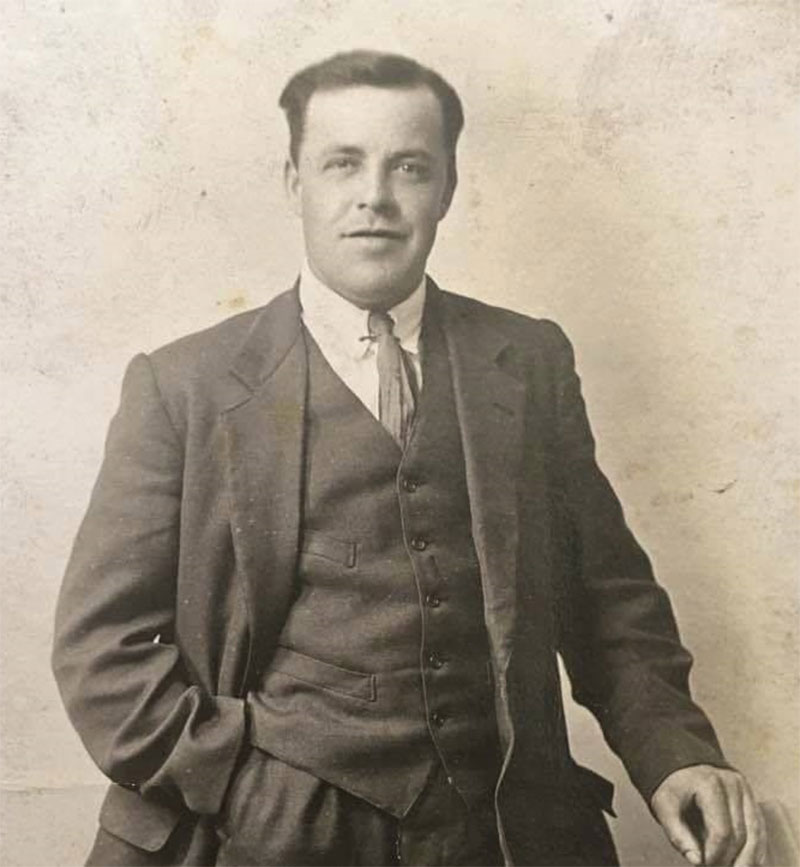
Alexander married Elizabeth Jacqueline Catharell (b. 21.1.1890 d. 22.3.1954) in St Paul’s Church, Seacombe in 1913. They had a son, also named Alexander Ballantyne Devoy, who was born 13.5.1914.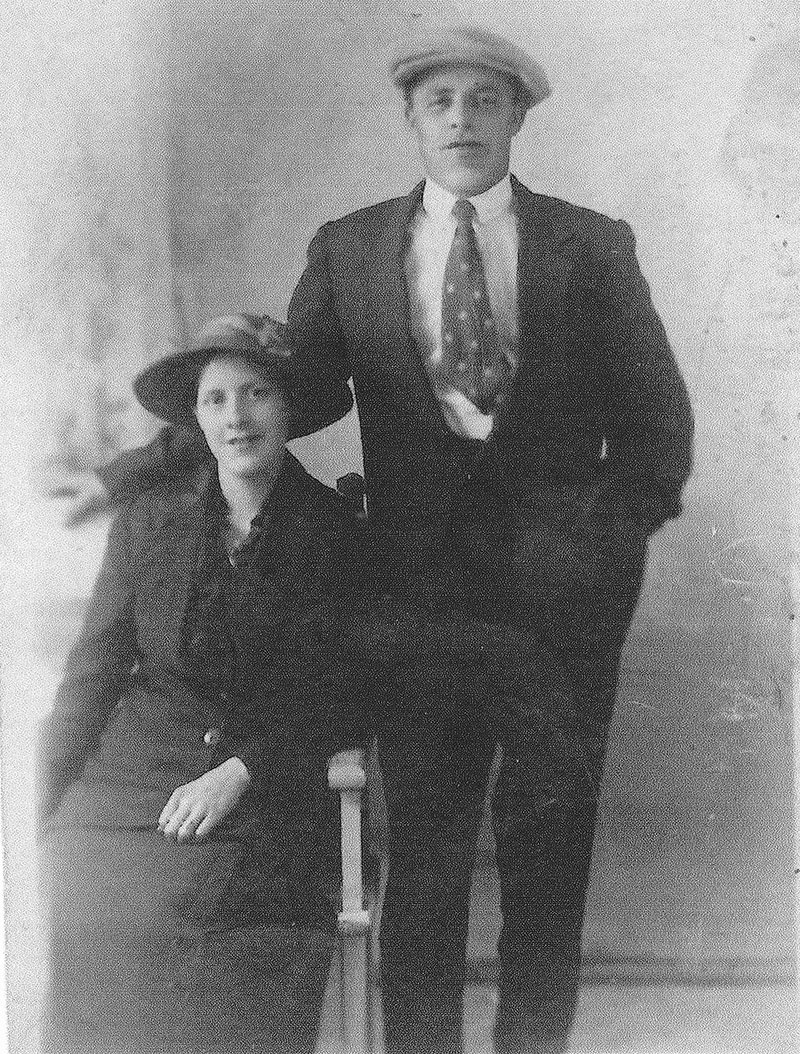
Alexander and Elizabeth on their wedding day.
This was followed by his daughter, Freda Beatrice Devoy, who was born April 1919 (Unfortunately, her father would never see her). Alexander’s widow, Elizabeth, remarried in 1920 to William Mannering (b. 1896) and later emigrated to New Zealand.
Alexander was aboard the ‘Barrister’ merchant ship on the 19th September 1918 when it was attacked by a German submarine and sunk. Alexander drowned along with his crewmates. He was 28. The Barrister (Official No. 137498) was a steel-hulled 4,952-ton steam cargo ship completed at Yard No.682 by Russell & Co., Port Glasgow in April 1916. She was launched as the Saint Hugo for British & Foreign SS. Co., Ltd., Liverpool and Rankin, Gilmour & Co., Ltd. were the managers. In 1917 she was renamed Barrister by Charente Steam Ship Co., Ltd., Liverpool and T. & J. Harrison were the managers. It was defensively armed - manned by RNVR seaman
On 19 September 1918, the ship was torpedoed and sunk by U-boat UB 64, 9 miles West and ½ mile North of Chicken Rock, an isolated bare rock with a lighthouse, about one and half miles south of the Calf of Man, Isle of Man, while on a voyage from Glasgow & Liverpool to the West Indies carrying general cargo & mails. All thirty members of the crew were lost: drowned.
German U-boat UB64 was also responsible for the sinking of 29 merchant ships during the war, with the Barrister being the largest merchantman at 4952 tons, although it had also sunk a larger Royal Navy ship, HMS Marmora in July 1918. It sank only one more ship before the end of hostilities: the Downshire, a small coaster which was shelled two days later on the 21st September. Fortunately, the crew survived. Eventually the submarine was surrendered to the British and later broken up.
Medals awarded to Alexander: Mercantile Marine War Medal, British War Medal. Along with the medal, the next-of-kin of those men and women who lost their lives as a result of enemy action, were presented with a memorial plaque and memorial scroll, both inscribed with the deceased's full name, and a condolence slip.
The crew members of the Barrister are commemorated at Tower Hill Memorial in London along with all those lost at sea in the Mercantile Marine.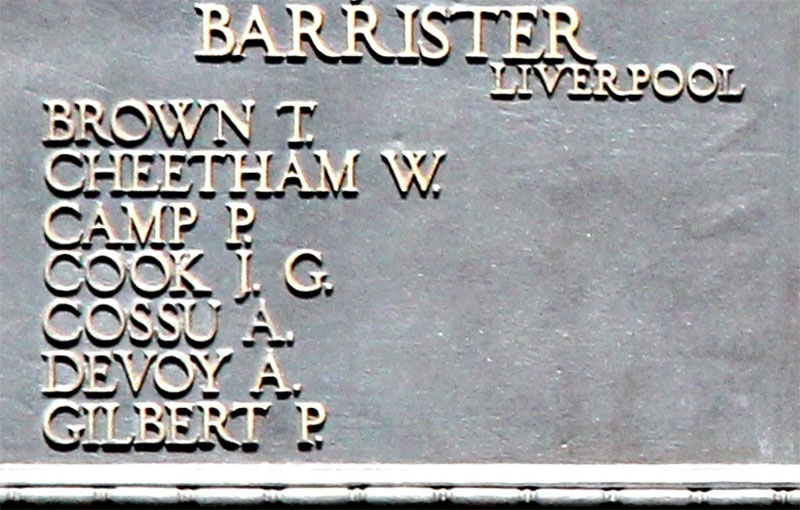
There is only one account of the sinking of the Barrister: According to Sir Archibald Hurd's 'History of The Great War - The Merchant Navy, Volume 3, Spring 1917 to November 1918 Chapter 10, page 296':
“A disaster of appalling suddenness occurred when the Serula (1,388 tons) was torpedoed on the 16th off the south‑west coast of Wales. The second officer, one of the few survivors, said, "She just gave a shudder, and sank like a stone, stern first." The master and sixteen of the crew were drowned. Again the submarine commander did what he could afterwards to ameliorate the situation, taking the survivors on board the submarine and conveying them to a raft some distance off, on which he placed them to await assistance. The Barrister (4,952 tons), which also went down very quickly off the Isle of Man ‑ only three minutes elapsing after she was struck ‑ did not experience similar consideration. Thirty of her crew were drowned, the submarine commander ignoring a request for help which the master, Mr. Lawrence Smith, addressed to him. Another heavy loss this month occurred on the 21st, when the Polesley (4,221 tons) was sunk, and the master and forty‑two of the crew were drowned.”
Researched and written by Barry Huston