


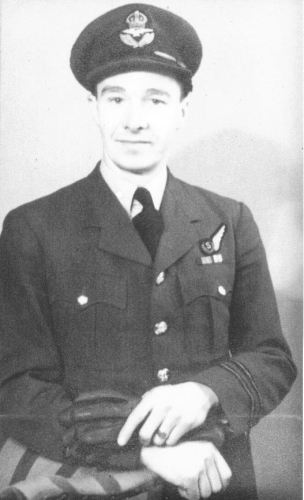
Allen's Story.
Allen Tittle was born on 20 March 1921 and grew up in Frodsham, Cheshire. His parents were Allen and Harriet. His older sister Elsie Tittle served in the Wrens but Allen was initially unable to join up as he was completing his apprenticeship as a bricklayer, a reserved occupation.Enlistment and Training
Allen enlisted in the RAF on 8th July 1942 and volunteered for aircrew duty. Details of his training are not available but it is likely that he carried out his initial training as a Wireless Operator in either Canada or UK. Following his initial training he completed operational training at an Operational Training Unit ( OTU). In Allen’s case this was at 14 OTU at RAF Market Harborough in March 1944 . He joined Tony Iveson’s crew whilst at 14 OTU. Training at the OTU would have been in twin engined Wellington bombers and would have lasted approximately 3 months. Following training at the OTU he went to 1661 Conversion Unit at RAF Winthorpe in June 1944 for approximately 5 weeks training in 4 engine bombers following which they went to 5 Lancaster Finishing School ( 5LFS) for one week at RAF Syerston for final training in the Lancaster bomber. He joined 617 Squadron on 2nd July 1944 as part of Tony Iveson’s crew. The crew that joined 617 Squadron with F/L Iveson were as follows.
Pilot F/L Tony Iveson
Air Bomber Sgt Frank Chance
Navigator F/O Jack Harrison
Flight Engineer Sgt Desmond Philips
Wireless Operator P/O Allen Tittle
Mid Upper Gunner Sgt Leslie Smith
Rear Gunner Sgt Ted Wass


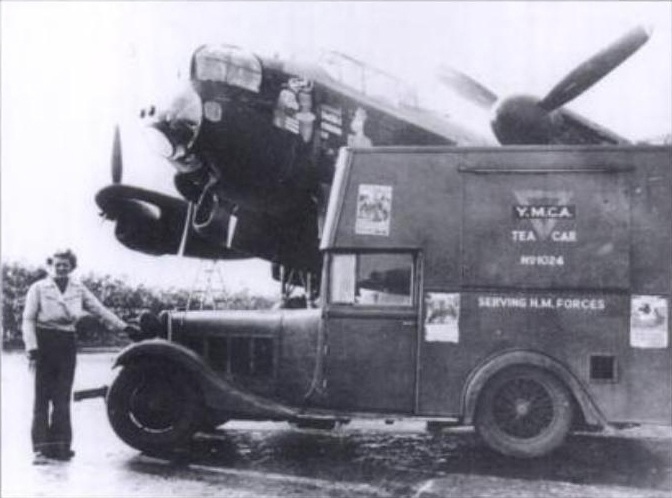
ME 554 Allen's usual aircraft with YMCA Tea Car


Allen’s Missions with 617 Squadron
Allen completed 16 missions with 617 Squadron as part of Tony Iveson's crew before being captured after baling out over Norway on his 17th mission on 12th January 1945 when the aircraft was hit by fire from a German fighter. He spent the rest of the war as a POW in Germany before returning home.
Allen's Missions
5th August 1944
Target Brest U Boat Pens
Aircraft ME554
Bomb Load Tallboy ( 1x 12,000lb)
Result Hit aiming point

Operation Record
6th August 1944
Target Keroman U Boat Pens
Aircraft ME554
Bomb Load Tallboy ( 1x 12,000lb)
Result Apparent success

Operation Record
7th August 1944
Target L’Orient U Boat Pens
Aircraft ME554
Bomb Load Tallboy ( 1x 12,000lb)
Result Abandoned. Brought bomb back

Operation Record
9th August 1944
Target La Pallice U Boat Pens
Aircraft ME554
Bomb Load Tallboy ( 1x 12,000lb)
Result Appeared to be successful

Operation Record
24th August 1944
Target Ijmuiden E Boat Pens
Aircraft PD238
Bomb Load Tallboy ( 1x 12,000lb)
Result Appeared to be successful

Operation Record
27th August 1944
Target Brest Shipping
Aircraft PD238
Bomb Load 12 x 1000lb bombs
Result Hit ship with 1 1000lb bomb. Ship on fire

Operation Record
11th September 1944
Target Tirpitz via Russia
Aircraft ME554
Bomb Load Tallboy ( 1x 12,000lb)
Result Tallboy jettisoned on trip to Russia loaded mines from another aircraft in Russia and dropped on target area.

Operation Record
23rd September 1944
Target Ems Canal
Aircraft ME554
Bomb Load Tallboy ( 1x 12,000lb)
Result Cancelled. Bomb brought back.

Operation Record
3rd October 1944
Target Westkappelle Sea Wall
Aircraft ME554
Bomb Load Tallboy ( 1x 12,000lb)
Result Mission cancelled

Operation Record
7th October 1944
Target Rhine Barrage
Aircraft ME554
Bomb Load Tallboy ( 1x 12,000lb)
Result Hit river bank

Operation Record
28th October 1944
Target Tirpitz
Aircraft ME554
Bomb Load Tallboy ( 1x 12,000lb)
Result Result could not be observed

Operation Record
12th November 1944
Target Tirpitz
Aircraft ME554
Bomb Load Tallboy ( 1x 12,000lb)
Result Success. Tirpitz sunk
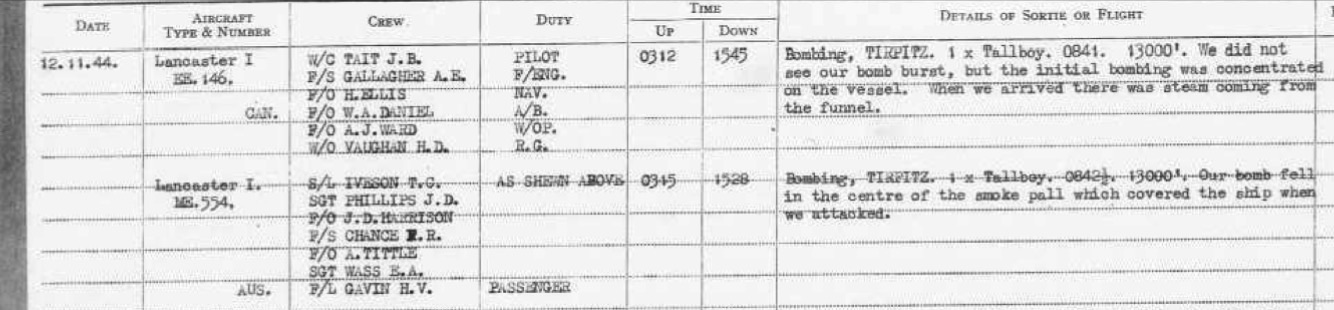
Operation Record
8th December 1944
Target Urft Dam
Aircraft ME554
Bomb Load Tallboy ( 1x 12,000lb)
Result Unable to bomb

Operation Record
11th December 1944
Target Urft Dam
Aircraft ME554
Bomb Load Tallboy ( 1x 12,000lb)
Result Bomb hit water did not explode.

Operation Record
15th December 1944
Target Ijmuiden U boat pen
Aircraft ME554
Bomb Load Tallboy ( 1x 12,000lb)
Result Could not observe hit due to smoke
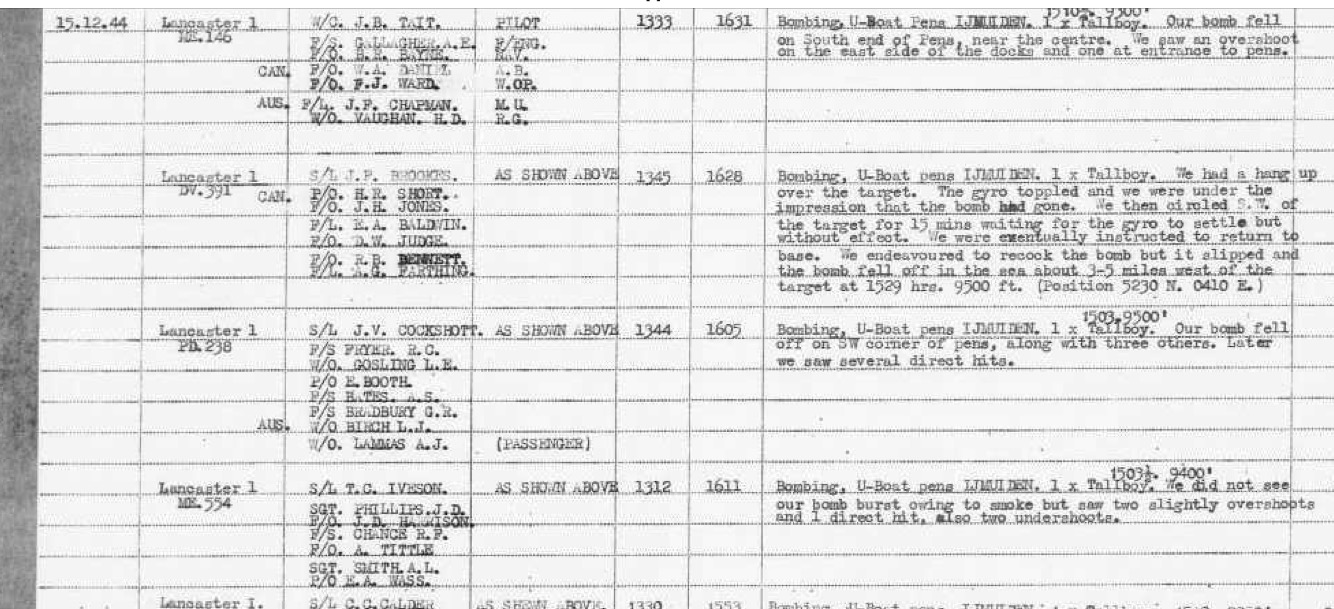
Operation Record
21st December 1944
Target Politz
Aircraft ME554
Bomb Load Tallboy ( 1x 12,000lb)
Result target not identified did not drop bomb

Operation Record
12th January 1945
Target Bergen U Boat Pens
Aircraft NG181( ME554 had suffered brake failure)
Bomb Load Tallboy ( 1x 12,000lb)
Result Attacked by fighters. Bomb jettisoned. 3 crew including Allen baled out

Operation Record
Pilot S/L Tony Iveson’s account of the events of 12 January 1945 ( from " The Lancaster and the Tirpitz" by Tony Iveson and Brian Milton)
I remember there were sheets of white stuff going over the top of the canopy and the port inner engine suddenly burst into flames. At the same time, M-Mike tried to stand on
its tail! A Focke-Wulf 190 had come in behind us and fired at us. He was, thankfully, not a very good shot. If he had been a yard or so to the right he would have been firing cannon shells right through the fuselage – tail to nose – and he would probably have killed us all.
As it was, he hit the port fin and rudder, the port elevator and tail-plane, tearing great lumps out of them, knocking out the port inner engine and setting us on fire. Being on fire is normally fatal, especially when the seat of the blaze is close to the fuel tanks. I was a bit too busy to see that Focke-Wulf go by.
Our immediate problem was the engine blaze to my left, though I was personally struggling to stop the aircraft rearing up vertically. In the circumstances I gave the ‘stand-by to abandon aircraft’ order almost automatically, but I was in no position to do anything like that myself. My flight engineer, Desmond ‘Taffy’ Phillips, bomb-aimer/front gunner Frank Chance and Harrison, my navigator, were all up the front of the aircraft with me. They could see what was going on and we were struggling to control the aeroplane. If we had to bale out, our designated escape route was through a narrow forward hatch only 22 inches (56cm) wide – one reason why Lancasters had the poorest record of British heavy bombers for bale-outs. The wireless operator, Alan Tittle, and both gunners, Ted Wass and Leslie Smith took their positions by the rear door. We had frequently practiced stopping an engine fire. Having amassed 1,500 hours as an instructor, I was diligent about these matters. I often told my engineer on take-offs – when we were not operational – to cut any engine without warning. My reasoning was, do it on a nice day and get used to losing an engine, so that if it happened on operations the procedures will be routine. It worked out that way. Taffy feathered the inner port engine immediately and stopped the propeller. He cut off the fuel, running through the drills automatically. Then he fired the Graviner switch, which sprayed the engine with carbon
dioxide and put out the fire. We did it so fast that the fire really did not get going. That was all down to our having practised these rapid routines. The main actor in this drama was the flight engineer, Taffy Phillips. The fire had produced a lot of flames and smoke and it must have looked to others in the squadron, and to the enemy fighters, that we were goners. We still had a Tallboy on board but I had pulled out of the squadron formation. I seemed to be on my own. I cannot remember other aircraft around, though I could hear Fauquier’s instructions on the radio.
At any moment my Lancaster threatened to rear up vertically, flip over and go into a fatal dive from 15,000ft (4,572m). What stopped it was my knees and my hands, pushing the control yoke forward. I stuck my knee in between the stick and my seat and was holding the heavy yoke forward with both hands. We decided to jettison the bomb, Frank did whatever was necessary and it dropped into the sea. Aside from talking to my immediate crew, I was far too busy to talk to anyone else. I did see one Focke-Wulf climb up in front of me and do a half roll.I remember thinking, you cheeky bugger! Frank Chance came up from the bomb-aimer’s position and managed to find a piece of rope somewhere and tied it to the stick – with some difficulty – so he could pull it forward and get some of the strain off my arms. Taffy went back and discovered loose ends from the trimming wires to the elevator, which had been shot half to pieces. He started scrabbling with these control wires, managing to collect them and tie them on to something. Intercom communication with the rest of the crew was no longer possible because the port inner engine provided the power for the intercom and that had been shot away. Taffy passed shouted messages through Jack Harrison, to me, and kept asking, ‘How’s that?’ I would reply, a little more, a little more, and eventually we got it to the point where I had some control. He tied up the trimming tabs. Then he went back and discovered three helmets on the step next to the door, and three parachutes missing!
In his combat report the German pilot Orlowski said he attacked the Lancasters immediately from the front, but then rounded and made an attack on my aircraft from the rear. ‘I succeeded in damaging one engine during my first attack on M-Mike from the rear’ he reported.
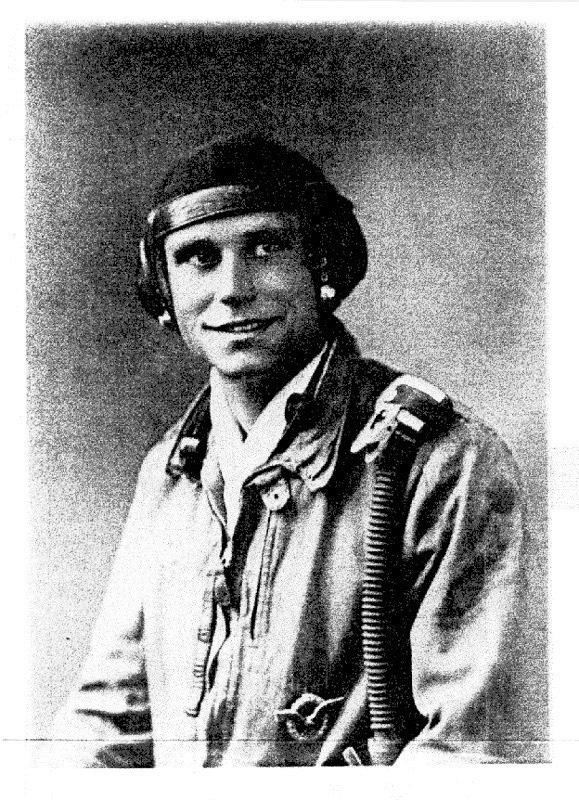
Heinz Orlowski
‘I tried to eliminate the defence and destroy the tail unit.’ It looked convincing, with M-Mike trailing smoke, the inner port engine in flames and three parachutes floating away from the stricken aircraft. The last thing my crew members in the rear part of the Lancaster had heard from me before their intercom went silent was ‘Prepare to abandon aircraft. They heard nothing else, the aircraft was all over the sky and seemed to be doomed, so they baled out on their own initiative.


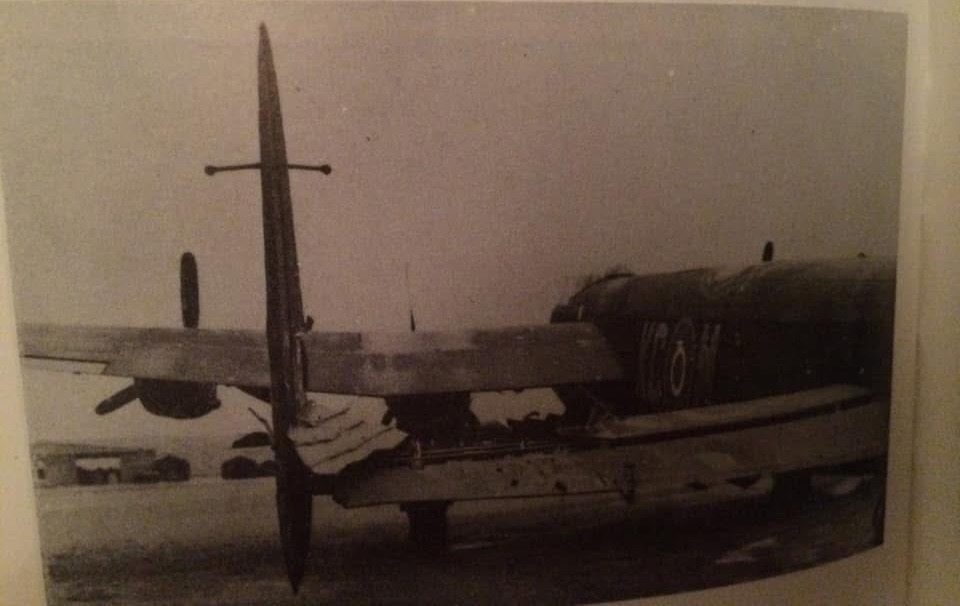
Damage to NG181. Photo taken after landing at Sumburgh
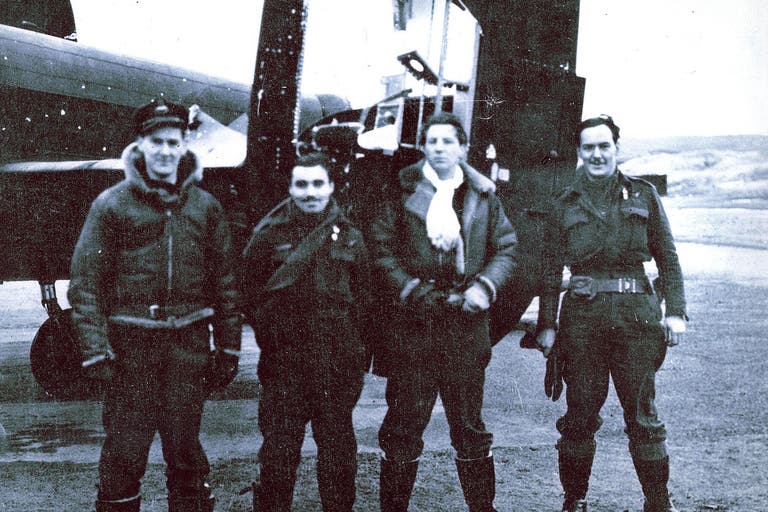
Crew of NG181 after landing at Sumburgh on 12 January 1945. From left to right Jack Harrison ( Navigator) Desmond Phillips ( Flight Engineer) Tony Iveson ( Pilot) and Frank Chance ( Bomb Aimer). Note damage to tail of aircraft.
Prisoner of War
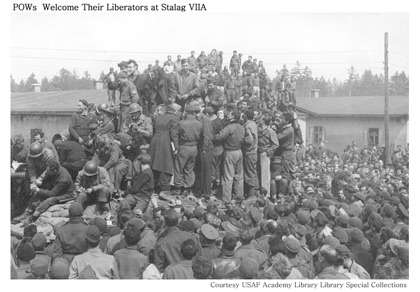
Allen was captured on 12 January 1945 near Bergen in Norway and taken to Dulag Luft near Frankfurt for interrogation. In February 1945 he was administratively posted to Stalag Luft III during the evacuation period following the Soviet advance, while in reality being moved west and south through Germany as part of the late-war POW evacuations. On 18 April 1945 he was formally re-registered at Stalag VII-A, Moosburg, which had become the main collecting camp for Allied POWs. He remained there until liberation by United States forces on 29 April 1945, with POW administration continuing briefly into early May.
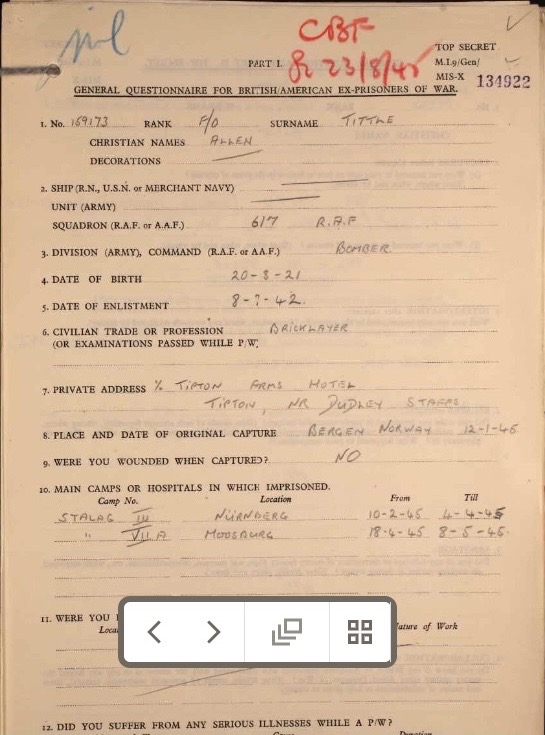
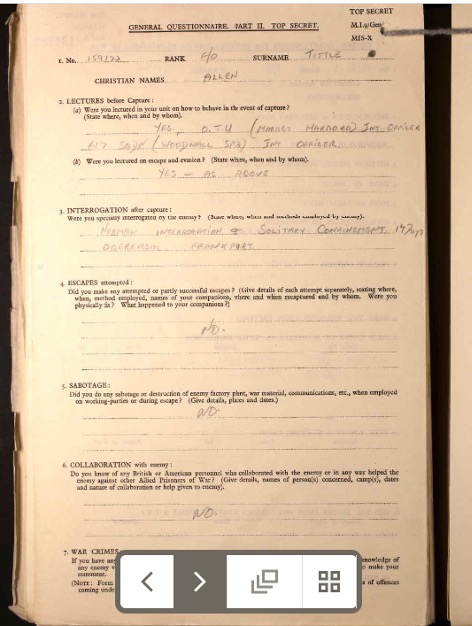
POW Questionaire
Post War
After the war, Allen stayed on in the RAF, serving as quartermaster at Tipton, then in Staffordshire. About 1951 he returned to work for his brother Arthur's building firm in Runcorn. There he met Thelma Lowndes, who worked for her own family's building company. They married in 1955. Allen took over the family business on his brother's death in 1974 and ran it until he retired in 1986. He died in Runcorn hospital on 28 August 1998.
Researched by Steve Merrill
Thanks to:
Fiona Barry
David Tittle
Dr. Robert Owen. Historian 617 Squadron Association