


Levi's Story.
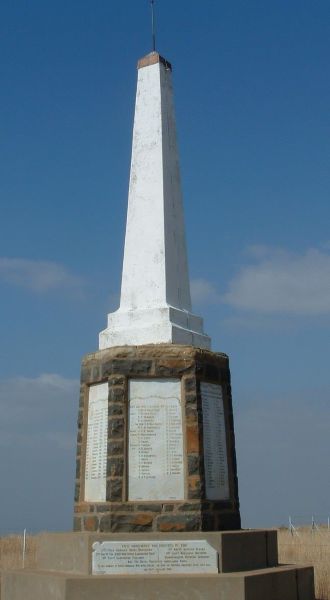
Regimental Number 3586 Private Levi Bamford of 2nd Battalion the (King's Own) Royal Lancaster Regiment was killed in action on 24th January 1900 at the Battle of Spion Kop. He was 30 years old. Levi was buried on the battlefield, and is commemorated on a memorial at the site.
Levi's battalion were deployed to South Africa for the Second Anglo Boer War, sailing out to Cape Town on the trooping ship SS Dilwara on 2nd Dec 1899 and arriving on 25 Dec 1899.
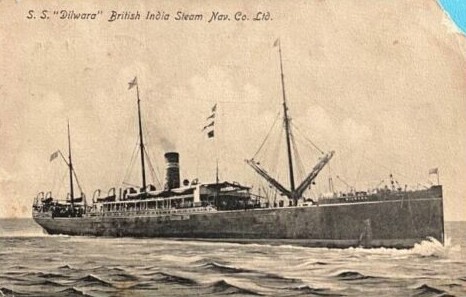
SS Dilwara in 1909
Along with the 2nd Lancashire Fusiliers, the 1st South Lancashire Regiment, and the 1st York and Lancaster Regiment, they formed the 11th Brigade under Major General Woodgate. They were sent to Durban to take part in the relief of Ladysmith. Private Bamford was killed in the attack at Spion Kop on 24th Jan 1900, some 6 miles east of Acton Homes. He was buried on the battlefield at Spion Kop, Natal. He is commemorated on the (King's Own) Royal Lancaster Regiment Spion Kop memorial plaque at Lancaster Priory (St Mary's Church), Castle Hill, Lancaster.
What do we know about Levi?
Levi's battalion were deployed to South Africa for the Second Anglo Boer War, sailing out to Cape Town on the trooping ship SS Dilwara on 2nd Dec 1899 and arriving on 25 Dec 1899.
SS Dilwara in 1909
Along with the 2nd Lancashire Fusiliers, the 1st South Lancashire Regiment, and the 1st York and Lancaster Regiment, they formed the 11th Brigade under Major General Woodgate. They were sent to Durban to take part in the relief of Ladysmith. Private Bamford was killed in the attack at Spion Kop on 24th Jan 1900, some 6 miles east of Acton Homes. He was buried on the battlefield at Spion Kop, Natal. He is commemorated on the (King's Own) Royal Lancaster Regiment Spion Kop memorial plaque at Lancaster Priory (St Mary's Church), Castle Hill, Lancaster.
What do we know about Levi?
Levi Bamford was born in Macclesfield on 26th October 1869, the second son of George (1838 - 1925) and Hannah nee Coops (1847 – 1904). His father was a silk weaver. Levi’s occupation in 1891 was a labourer or light porter. He was later a silk piecer. Aged 19, when he joined the army, he was 5 foot 4 inches in height, and weighed 116 pounds (8 stone 4lbs, or 52kg. His address then was 5 Parker Croft, Silk Street, Macclesfield.
He enlisted in the Lancaster Regiment in Bury, Lancs, on 26th April 1892, and completed his 7 year service on 25th April 1899. Three months after leaving the army, on 4th August 1899, he joined the London and North Western Railway Company in Crewe. He had married Mary Dean in Macclesfield on 9th April 1898. Mary was the daughter of John Dean, an engine driver, and Fanny nee Kennerley. Mary's address then was 9 Windmill Brow, Macclesfield.
He enlisted in the Lancaster Regiment in Bury, Lancs, on 26th April 1892, and completed his 7 year service on 25th April 1899. Three months after leaving the army, on 4th August 1899, he joined the London and North Western Railway Company in Crewe. He had married Mary Dean in Macclesfield on 9th April 1898. Mary was the daughter of John Dean, an engine driver, and Fanny nee Kennerley. Mary's address then was 9 Windmill Brow, Macclesfield.
Not long after he and his wife moved to 81 Ridgeway Street, Crewe to work for LNWR, Levi was recalled for the Boer War campaign, departing the UK on 2nd December 1899. He arrived in South Africa on Christmas Day, shortly before the birth of his son Levi on 6th January 1900. Sadly, the baby survived only a day or so, and was buried on 10th January, a fortnight before his father’s death in South Africa on 24th January. Levi had been in South Africa for less than a month. Of the 26 men listed on the Boer War memorial in Crewe, only three were killed in action. Others died of disease (19) or accidents (4).
"The 24th January 1900 will be ever remembered by many a Lancashire lad."
An account of the Battle of Spion Kop was published on 10th March 1900, written by a soldier from Levi's regiment, Private John Cosgrove, who had kept a diary that he sent to the Stalybridge Reporter newspaper.
"On the evening of the 23rd, as soon as darkness came, six companies of my regiment were marched away from where we had been resting all day, but most of us thought that the whole of the regiment were on parade. We did not know why we were moving, nor where we were moving to. When we had been marching about an hour we came to a along valley, through which we marched with great difficulty for several hours, as there were many holes and stones in it. We had to march as silently as possible, and a dog got strangled for barking. I have been told since that all who interfered with that dog got shot on Spion Kop, but I cannot vouch for the truth of that statement. At length we came to the foot of a large hill, the top of which we could not see, owing to the darkness, and to the mist which always rests on the hills during the night. As soon as we arrived at the hill we were told to climb it. While we were marching through the valley, it was generally believed that we were ‘doing a quiet move towards Ladysmith at which the troops were pleased. Because Sir Archibald Hunter, who is with Sir George White, belongs to my regiment, and knew that we were part of the relief column. In fact, three weeks ago he sent the following message to us through Sir Charles Warren: “With God’s and the King’s Own’s help we cannot fail.” However, while climbing the hill we knew we were going to take possession of it, and we then learned that we had with us two companies of the Lancashire Fusiliers and two companies of the South Lancashire Regiment. There were so many rocks and stones on the hill that we soon got scattered while climbing. We got to the top of one hill and advanced about a hundred yards, and found that we had another to climb, and the men kept expressing their wonder, sometimes in strong language, as to when we should get to the top. After climbing five hills in this manner, and hearing men say we should soon be in heaven if we went much higher, I said to a comrade close beside me, “I wonder if this is the top,” and I had hardly uttered the words when I heard someone in front shout something in a foreign language, and immediately about a dozen bullets went whistling past me.
....
When we got away I called that hill “Butchers Hill” for verily there was butchery on it that day. The dead and wounded were lying about in large numbers, and many a poor fellow had to lie wounded in the trench all day. The Volunteer bearer company did good work that day, but they could not get half the ….. off the hill. Every time they came for a wounded man they had to run through a shower of bullets to say nothing of the shells which the Boers kept firing all day, for our artillery could do but little for us, as we were under heavy cross fire, and they were in danger of hitting us. In fact, some say that our artillery did accidentally shoot some of our men. I might sum up by saying that the day’s fighting was simply horrible, but I have also to say that many of our men merited the Victoria Cross that day.
A few days ago General Buller had a parade to thank us for our behaviour and our gallant conduct, and to read to us the Queen’s message of thanks, and this morning Sir Charles Warren, who had been away on the other side of the Tugela since that memorable day, had a parade to thank us for our gallant conduct, but he said he could not find words to adequately express his feelings of gratitude. Both Buller and Warren wish to impress on our minds the fact that we did all that was required of us that day, and that our efforts were not in vain. It is generally believed that we were able to get a convoy through to Ladysmith whilst the fighting was going on. I cannot at present detail all the noble deeds that were done that day, but I’ll mention one as a sample. Joe Bailey, a man of my company (C), was shot in about four places on his legs and when the stretcher bearers came for him he referred them to a man named Miller of my company, saying “Take him, he’s worse than me”. Joe was called up with me from Manchester and is a guard on the London and North Western Railway Company. I have since heard that he is progressing very favourably. He is a humorous fellow, and is liked in the company. The night we were climbing the kop Joe said, when we had climbed about three hills. “Are there any more to climb, and when he was told that there were he said “ I wish I’d banged that postman when he brought me that blue paper!”
We came back here to Springfield two days after the fight, and we don’t know what the next move will be. I have just heard that Tommy Doran, a man of my company, who belonged to Ashton, has died of his wounds. Poor fellow, I often saw him when I was driving my car along Katherine Street, and I tender to his parents my heartfelt sympathy. God help and comfort them in their sore bereavement.
I remain sir, your faithfully.
John Cosgrove, Private
C Company, Royal Lancaster Regiment"
Field Forces
South Africa
Newspapers
CASUALTIES IN SOUTH AFRICA. SPION KOP. Casualties to ?th Division and mounted troops in action at Spion Kop
... Varey 5385 Pte. J, Swindells 2943 Pte. R. Bland 2536 Pte. R. Fairclough 2699 Pte. W. Fisher 4777 Sergt. F. Dickson 3586 Pte. L. Bamford 2609 Pte. W. Brogan 2758 Pte. F. Gonnley 2526 Fte. T. Doran 5693 Pte. H. Norbury 5461 Pte. T. Oldfield 4357 Pte. F ...
Newspaper: Army and Navy Gazette Saturday 03 February 1900
"The 24th January 1900 will be ever remembered by many a Lancashire lad."
An account of the Battle of Spion Kop was published on 10th March 1900, written by a soldier from Levi's regiment, Private John Cosgrove, who had kept a diary that he sent to the Stalybridge Reporter newspaper.
"On the evening of the 23rd, as soon as darkness came, six companies of my regiment were marched away from where we had been resting all day, but most of us thought that the whole of the regiment were on parade. We did not know why we were moving, nor where we were moving to. When we had been marching about an hour we came to a along valley, through which we marched with great difficulty for several hours, as there were many holes and stones in it. We had to march as silently as possible, and a dog got strangled for barking. I have been told since that all who interfered with that dog got shot on Spion Kop, but I cannot vouch for the truth of that statement. At length we came to the foot of a large hill, the top of which we could not see, owing to the darkness, and to the mist which always rests on the hills during the night. As soon as we arrived at the hill we were told to climb it. While we were marching through the valley, it was generally believed that we were ‘doing a quiet move towards Ladysmith at which the troops were pleased. Because Sir Archibald Hunter, who is with Sir George White, belongs to my regiment, and knew that we were part of the relief column. In fact, three weeks ago he sent the following message to us through Sir Charles Warren: “With God’s and the King’s Own’s help we cannot fail.” However, while climbing the hill we knew we were going to take possession of it, and we then learned that we had with us two companies of the Lancashire Fusiliers and two companies of the South Lancashire Regiment. There were so many rocks and stones on the hill that we soon got scattered while climbing. We got to the top of one hill and advanced about a hundred yards, and found that we had another to climb, and the men kept expressing their wonder, sometimes in strong language, as to when we should get to the top. After climbing five hills in this manner, and hearing men say we should soon be in heaven if we went much higher, I said to a comrade close beside me, “I wonder if this is the top,” and I had hardly uttered the words when I heard someone in front shout something in a foreign language, and immediately about a dozen bullets went whistling past me.
....
When we got away I called that hill “Butchers Hill” for verily there was butchery on it that day. The dead and wounded were lying about in large numbers, and many a poor fellow had to lie wounded in the trench all day. The Volunteer bearer company did good work that day, but they could not get half the ….. off the hill. Every time they came for a wounded man they had to run through a shower of bullets to say nothing of the shells which the Boers kept firing all day, for our artillery could do but little for us, as we were under heavy cross fire, and they were in danger of hitting us. In fact, some say that our artillery did accidentally shoot some of our men. I might sum up by saying that the day’s fighting was simply horrible, but I have also to say that many of our men merited the Victoria Cross that day.
A few days ago General Buller had a parade to thank us for our behaviour and our gallant conduct, and to read to us the Queen’s message of thanks, and this morning Sir Charles Warren, who had been away on the other side of the Tugela since that memorable day, had a parade to thank us for our gallant conduct, but he said he could not find words to adequately express his feelings of gratitude. Both Buller and Warren wish to impress on our minds the fact that we did all that was required of us that day, and that our efforts were not in vain. It is generally believed that we were able to get a convoy through to Ladysmith whilst the fighting was going on. I cannot at present detail all the noble deeds that were done that day, but I’ll mention one as a sample. Joe Bailey, a man of my company (C), was shot in about four places on his legs and when the stretcher bearers came for him he referred them to a man named Miller of my company, saying “Take him, he’s worse than me”. Joe was called up with me from Manchester and is a guard on the London and North Western Railway Company. I have since heard that he is progressing very favourably. He is a humorous fellow, and is liked in the company. The night we were climbing the kop Joe said, when we had climbed about three hills. “Are there any more to climb, and when he was told that there were he said “ I wish I’d banged that postman when he brought me that blue paper!”
We came back here to Springfield two days after the fight, and we don’t know what the next move will be. I have just heard that Tommy Doran, a man of my company, who belonged to Ashton, has died of his wounds. Poor fellow, I often saw him when I was driving my car along Katherine Street, and I tender to his parents my heartfelt sympathy. God help and comfort them in their sore bereavement.
I remain sir, your faithfully.
John Cosgrove, Private
C Company, Royal Lancaster Regiment"
Field Forces
South Africa
Newspapers
CASUALTIES IN SOUTH AFRICA. SPION KOP. Casualties to ?th Division and mounted troops in action at Spion Kop
... Varey 5385 Pte. J, Swindells 2943 Pte. R. Bland 2536 Pte. R. Fairclough 2699 Pte. W. Fisher 4777 Sergt. F. Dickson 3586 Pte. L. Bamford 2609 Pte. W. Brogan 2758 Pte. F. Gonnley 2526 Fte. T. Doran 5693 Pte. H. Norbury 5461 Pte. T. Oldfield 4357 Pte. F ...
Newspaper: Army and Navy Gazette Saturday 03 February 1900
Researched by S. Lewington May 2025