


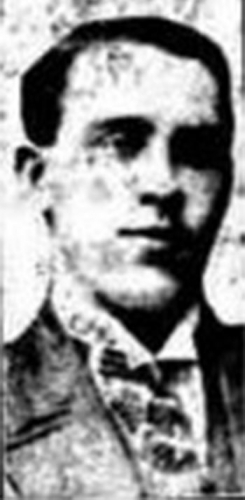
William Henry's Story.
William was born in 1893 to Thomas Richard and Catherine Mary Whyte in Runcorn.
In 1911 the family are living in Belvedere, Runcorn and he had 2 brothers and 2 sisters. Albert (28), Leonard (21), Nellie (14) and Nessie (9). William was 18 at the time and employed as a commercial clerk. His father worked at one of the numerous Tanneries in the town.
William joined the Liverpool Pals with his close friend Alfred Bradshaw who was injured by the same shell that injured William and died later. The article included below gives a detailed account of his service.
Friday 14th July 1916 Runcorn Weekly News Page 8
MORE RUNCORN CASUALTES. THE GREAT SACRIFICE. Among the many Runcornians who have made the supreme sacrifice for King and country is Private William Henry Whyte, son of Mr. and Mrs. T. R. Whyte, of The Belvedere, Runcorn, whose name figures among those who had the misfortune to lose their lives in the big push. Private Whyte was seriously wounded in the fighting of July Ist and succumbed to his wounds in one of the base hospitals in France. The sad news came in a letter from the chaplain of the hospital, who also informed the parents that their son had been laid to rest in a little cemetery close to and a cross had been placed on the grave bearing the date and their son's regimental number. Private Whyte was 26 years of age, and before the war was employed as a clerk at the old quay yard of the Ship Canal Co. He joined the Liverpool Pals in November of 1914, and after twelve months' training at Knowsley and Salisbury Plain, was drafted out to France in October of last year. Since he had been on active service he had not had any leave, but was often at home during the time he was at Knowsley. From a boy he had attended the Brunswick Sunday School and was also a regular attendant at the St. Paul's Wesleyan Church. He had also been an enthusiastic member of the Runcorn Boating Club, and both he and his family are very well known and respected in the town. A comrade writes: " in him I have lost a true friend. He was always courteous and obliging, and he was indeed sincere. The keenness of such a loss is not yet fully felt."
William died from his wounds on the same day and was buried in a marked grave.
He is also commemorated on a marble plaque in Brunswick Chapel in dedicated in 1920.
His two brothers appear to have survived the war.
Compiled by Graeme Ainsworth