


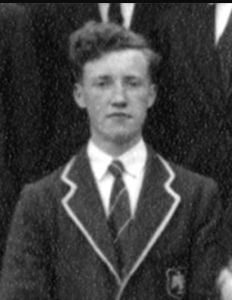
George David's Story.
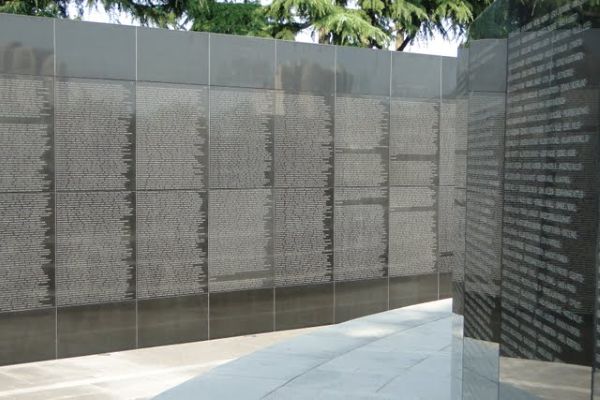
Twenty-year-old George David Rudge, 2nd Lieutenant, was killed in action in Korea on 25th April 1951. He has no known grave but is commemorated on the UN Wall of Remembrance, Pusan, Korea, and on the war memorial in Mellor. His name is engraved on the family headstone at St Thomas's Church in Mellor, near Stockport, and appears in the Armed Forces Memroial at the National Memorial Arboretum, Alrewas, Staffordshire.
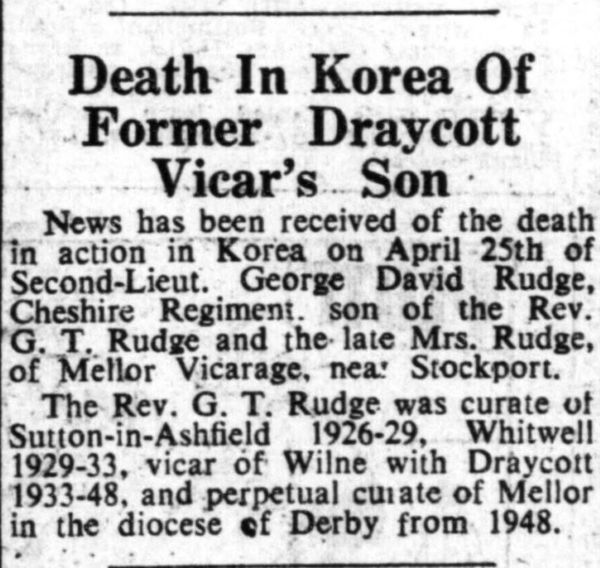
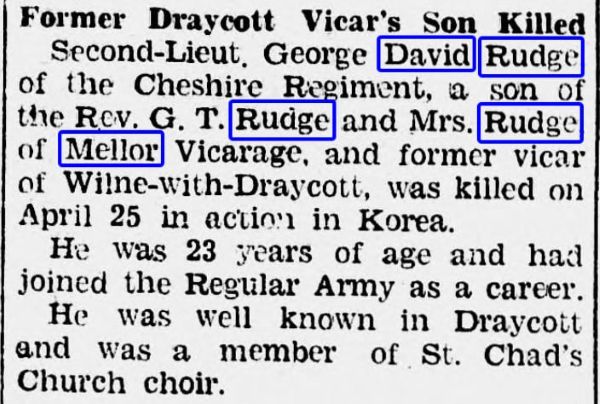
Nottingham Evening Post Published Thursday, 3 May 1951
George was the only son of Revd George Thomas Rudge (1900 - 1968) and his wife Ivy McPherson (1899 - 1950). He was born on 3rd August 1930 at Whitwell, where his father was curate. By September 1939, nine year old George was living with his parents and elder sister Jean Elizabeth Batterly Rudge (1928 - 1988) at The Vicarage, Station Road, Draycott, in Derbyshire.

This vicarage, built in 1875 and set in large grounds, was sold by the church in 1961 and was renamed Ferrestone House. (In 2024, it was scheduled to be demolished.)
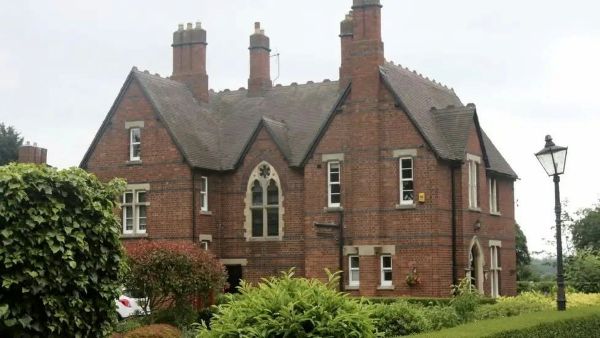
George's home from 1933 - 1948 (The Vicarage in Draycott)
His father was the vicar of St Chad's Church, Wilne with Draycott for 16 years. George junior was known to have sung in the church choir. Aged 14, he joined North House at St John’s School, Leatherhead, in 1944 and left in 1947. He was a member of the Shooting VIII and was awarded Shooting Colours and Minor House Colours in 1947.
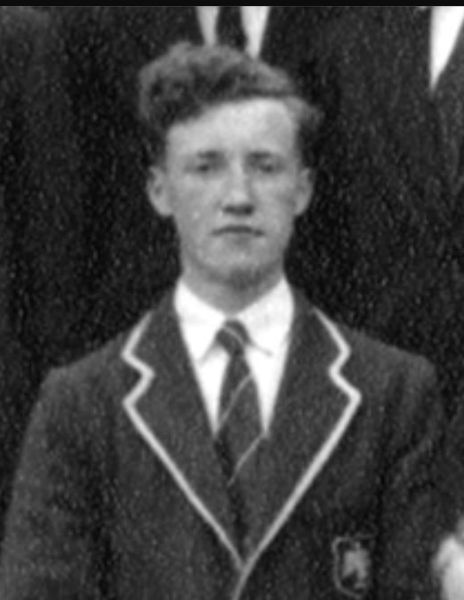
Photograph by kind permission of St John's School, Leatherhead.
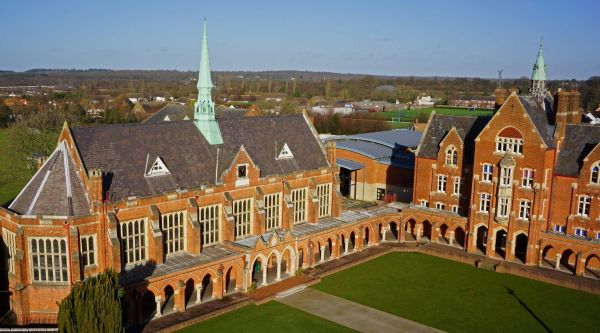
George was educated at St John's School, Leatherhead, Surrey. His name is recorded on the Roll of Honour in the School Chapel.
When George was eighteen, his family moved to Mellor, near Stockport. His father was the perpetual curate at St Thomas's Church from November 1948 until his death in January 1968. The pulpit of the church is the oldest wooden pulpit in England, and possibly in the world.
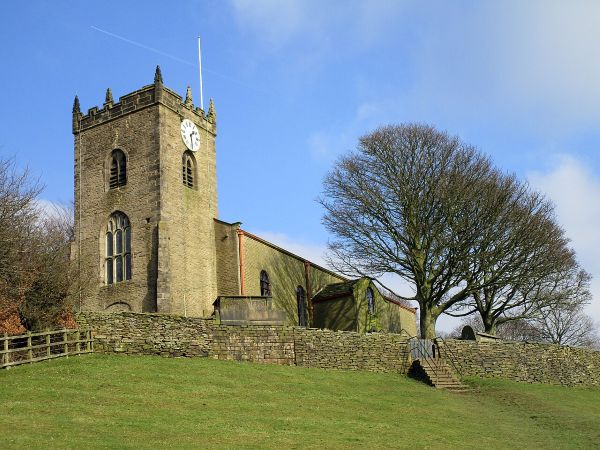
St Thomas's Church, Mellor, near Stockport
George's mother Ivy died on 3rd June 1950, and his sister Jean married Hugh Stanley Astle Wallis (1924– 2002) on 21st February 1951. A few months later, George would have gained a stepmother when Revd Rudge married Nell Roper (1913 - 1997) in the summer of 1951. George would never meet his half-sister Helen M Rudge, born in October 1953.
After leaving school (possibly St John's School, Leatherhead in Surrey), George enlisted into the Army, into the Cheshire Regiment, and was attached to Royal Northumberland Fuseliers. A draft of Royal Fusiliers were posted to the Gloucester Regiment and fought at the battle of Gloster Hill in 1951. One newspaper account refers to George having been in the Gloucester Regiment.
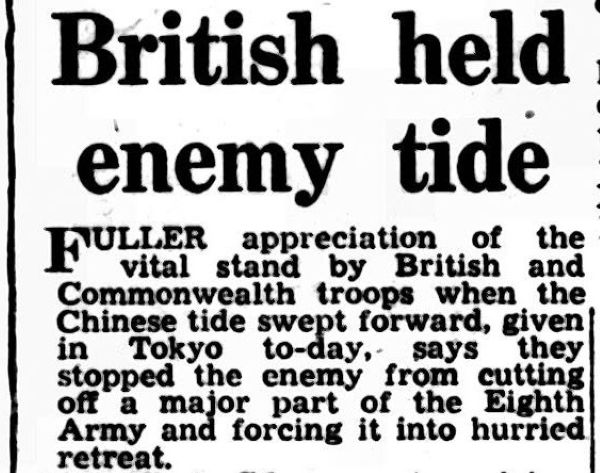
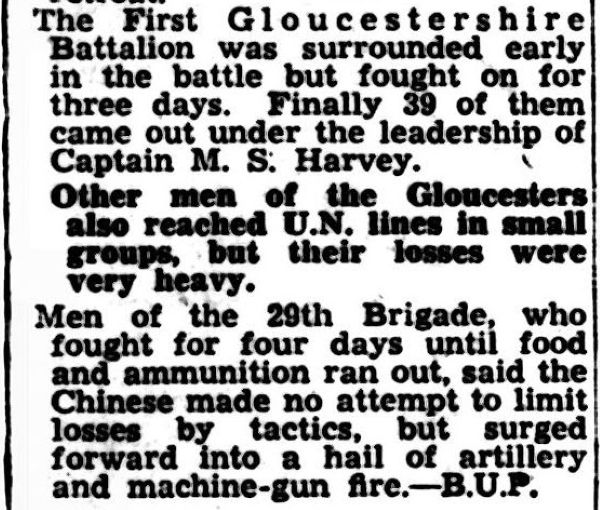
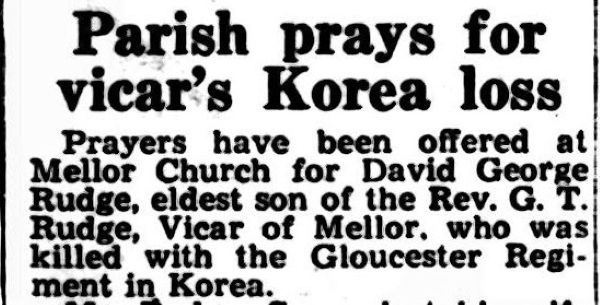
Manchester Evening News 30th April 1951
In Korea, George was serving with the United Nations forces. We do not have exact details of where and when he died, but it is almost certain that he was killed during the Gloster Hill battle, also known as the Battle of the Imjin River. This took place on 22nd - 25th April 1951, and was a significant engagement during the Korean War.
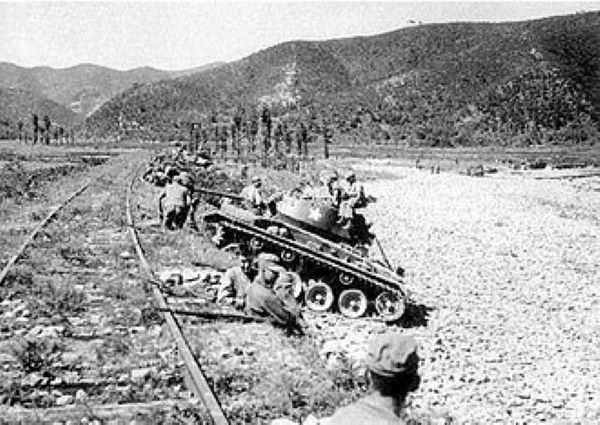
The battle of Gloster Hill took place by the Imjin River
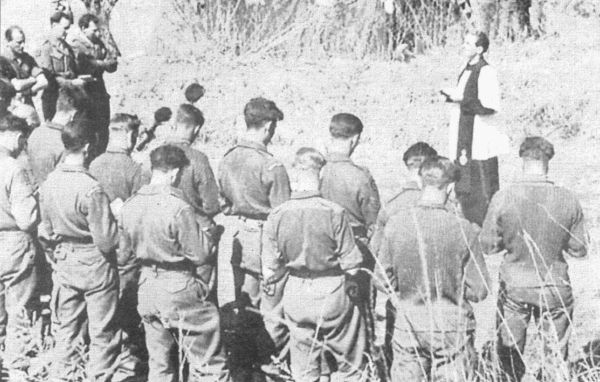
Prayers were offered by members of the Gloucester Regiment before the battle
The Gloucestershire Regiment, part of the 29th Infantry Brigade, fought bravely to defend Hill 235, which became known as Gloster Hill. Despite facing a numerically superior enemy, the regiment held their positions for three days, ultimately allowing UN forces to retreat to prepared defensive positions north of Seoul. However, the casualty cost to the Gloucester Regiment was very high. The 1st Battalion, The Gloucestershire Regiment, was outnumbered and eventually surrounded by Chinese forces on Hill 235, a feature that became known as Gloster Hill. The stand of the Gloucestershire battalion, together with other actions of the 29th Brigade in the Battle of the Imjin River, has become an important part of British military history and tradition
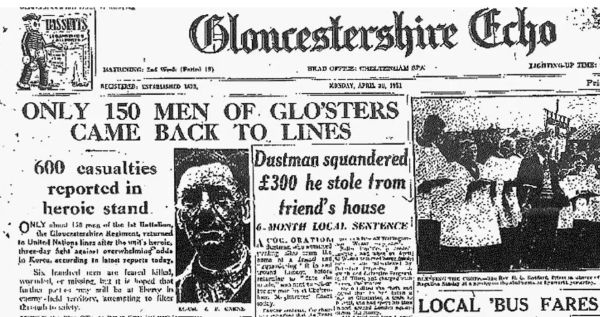
Amongst the numbers of the missing was George David Rudge. His body was not recovered from the battlefield but his name is recorded on the United Nations Wall of Remembrance in Busan, Korea.
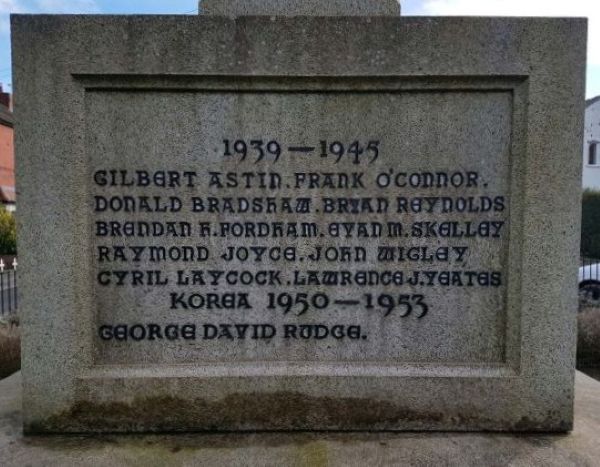
George's name was added to the War Memorial in Mellor.
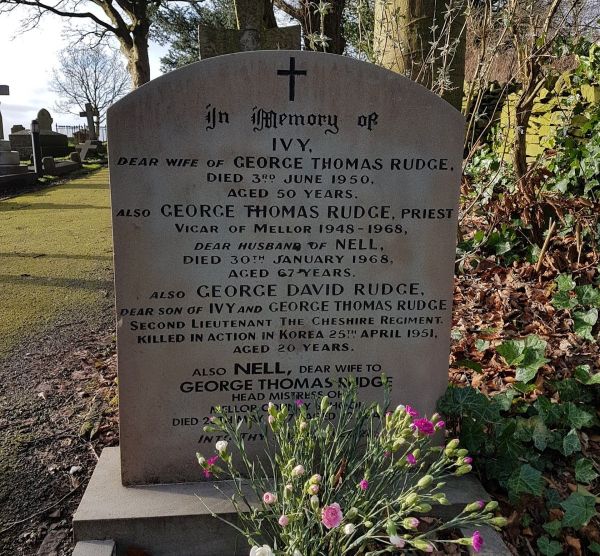
George is remembered on the family grave at Mellor.
Researched by Shena Lewington (October 2026)
Nottingham Evening Post Published Thursday, 3 May 1951
George was the only son of Revd George Thomas Rudge (1900 - 1968) and his wife Ivy McPherson (1899 - 1950). He was born on 3rd August 1930 at Whitwell, where his father was curate. By September 1939, nine year old George was living with his parents and elder sister Jean Elizabeth Batterly Rudge (1928 - 1988) at The Vicarage, Station Road, Draycott, in Derbyshire.
This vicarage, built in 1875 and set in large grounds, was sold by the church in 1961 and was renamed Ferrestone House. (In 2024, it was scheduled to be demolished.)
George's home from 1933 - 1948 (The Vicarage in Draycott)
His father was the vicar of St Chad's Church, Wilne with Draycott for 16 years. George junior was known to have sung in the church choir. Aged 14, he joined North House at St John’s School, Leatherhead, in 1944 and left in 1947. He was a member of the Shooting VIII and was awarded Shooting Colours and Minor House Colours in 1947.
Photograph by kind permission of St John's School, Leatherhead.
George was educated at St John's School, Leatherhead, Surrey. His name is recorded on the Roll of Honour in the School Chapel.
When George was eighteen, his family moved to Mellor, near Stockport. His father was the perpetual curate at St Thomas's Church from November 1948 until his death in January 1968. The pulpit of the church is the oldest wooden pulpit in England, and possibly in the world.
St Thomas's Church, Mellor, near Stockport
George's mother Ivy died on 3rd June 1950, and his sister Jean married Hugh Stanley Astle Wallis (1924– 2002) on 21st February 1951. A few months later, George would have gained a stepmother when Revd Rudge married Nell Roper (1913 - 1997) in the summer of 1951. George would never meet his half-sister Helen M Rudge, born in October 1953.
After leaving school (possibly St John's School, Leatherhead in Surrey), George enlisted into the Army, into the Cheshire Regiment, and was attached to Royal Northumberland Fuseliers. A draft of Royal Fusiliers were posted to the Gloucester Regiment and fought at the battle of Gloster Hill in 1951. One newspaper account refers to George having been in the Gloucester Regiment.
Manchester Evening News 30th April 1951
In Korea, George was serving with the United Nations forces. We do not have exact details of where and when he died, but it is almost certain that he was killed during the Gloster Hill battle, also known as the Battle of the Imjin River. This took place on 22nd - 25th April 1951, and was a significant engagement during the Korean War.
The battle of Gloster Hill took place by the Imjin River
Prayers were offered by members of the Gloucester Regiment before the battle
The Gloucestershire Regiment, part of the 29th Infantry Brigade, fought bravely to defend Hill 235, which became known as Gloster Hill. Despite facing a numerically superior enemy, the regiment held their positions for three days, ultimately allowing UN forces to retreat to prepared defensive positions north of Seoul. However, the casualty cost to the Gloucester Regiment was very high. The 1st Battalion, The Gloucestershire Regiment, was outnumbered and eventually surrounded by Chinese forces on Hill 235, a feature that became known as Gloster Hill. The stand of the Gloucestershire battalion, together with other actions of the 29th Brigade in the Battle of the Imjin River, has become an important part of British military history and tradition
Amongst the numbers of the missing was George David Rudge. His body was not recovered from the battlefield but his name is recorded on the United Nations Wall of Remembrance in Busan, Korea.
George's name was added to the War Memorial in Mellor.
George is remembered on the family grave at Mellor.
Researched by Shena Lewington (October 2026)