


Richard Croxton's Story.
Born 17 April 1922, Richard was the son Walter Henry and Catherine Evelyn Parr, in 1939 the family lived at 17 Collins Street, Crewe. Richard was a former pupil of Crewe Secondary School and in 1939 was working as an assistant gent’s outfitter.
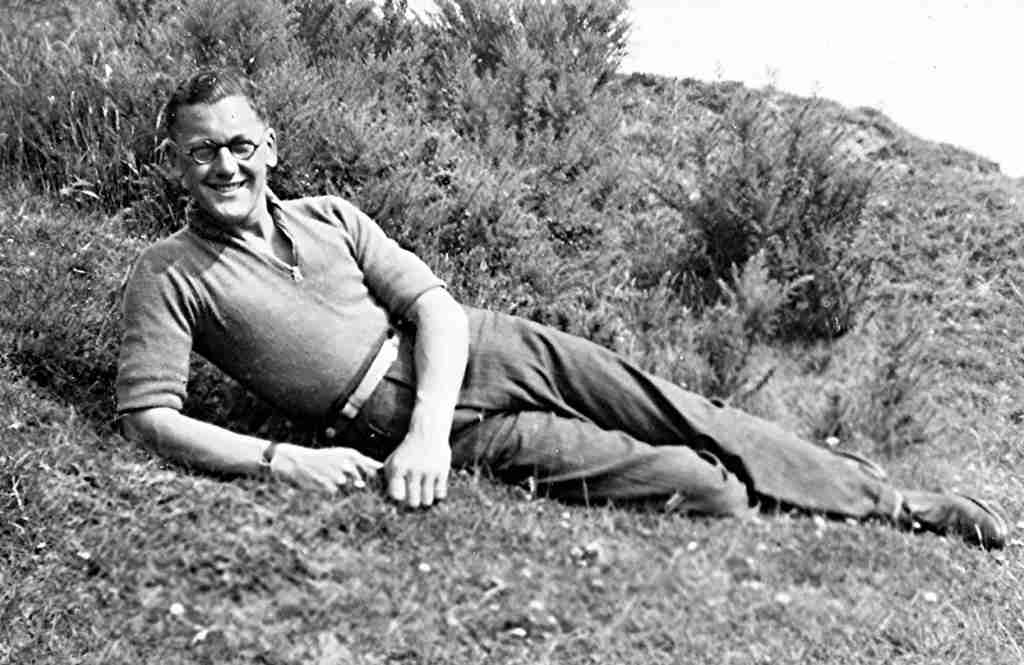
Richard Parr
Richard Croxton (Dickie) Parr was a member of 15082 GCI (Ground Control Interceptor) unit RAF and is believed to be the only person from Crewe who was killed during the D Day landings. He died on Omaha Beach which was an American landing site.
Training
The officers and airmen selected to maintain and operate GCI units in Normandy were first sent to RAF Renscombe Down, near Swanage in Dorset, where they spent about a year training for their primary role. Controllers and operators were subjected to a continuous programme of practice interceptions. Later, personnel were also trained to carry out their duties under field conditions. There were numerous exercises, including amphibious operations, and commando training was provided at the Combined Operations School, HMS Dundonald. The official monograph’s suggestion that unit personnel could all ‘be regarded as toughened fighting men as well as skilled technical tradesmen’ is, perhaps, something of an exaggeration. Nevertheless, they arrived in Normandy equipped with Sten guns, rifles and pistols, knowing full well how to use and maintain them.
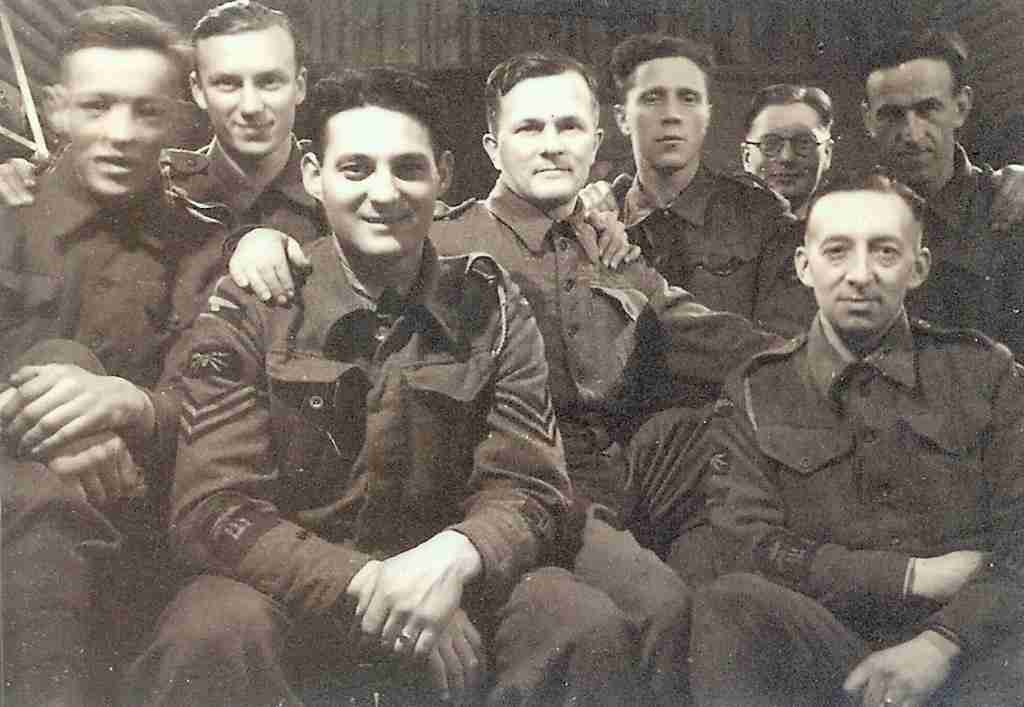
Men of 15082 on training in early 1944 Dickie is second from left
15082 GCI, Royal Air Force was a Ground Control Intercept Unit. Once ashore in Normandy the unit would set up radar equipment so that it could detect enemy aircraft before they attacked the Allied landing area and call in RAF fighters to deal with them.
GCI Equipment
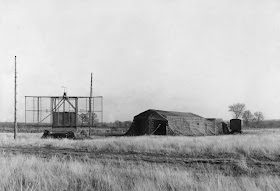
AMES Type 15 GCI
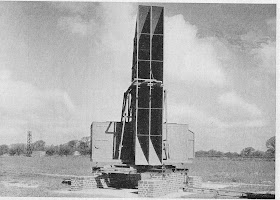
AMES Type 13 Height Finder
It was attached to the 9th US Army Air Force as the Americans had neither the technical equipment nor the trained personnel to maintain and operate the required equipment. It embarked in Portland, Dorset on the 3 June 1944 and landed on Omaha Beach on D-Day.
It had been planned for the GCI 15082 (part of 21 Base Defence Sector), to land on the beach codenamed “Easy Red” near to the St Laurent exit from the beach. Unfortunately, although American forces had secured ‘Easy Red’, GCI was incorrectly landed on “Dog Red” section of Omaha beach near to the exit to the hamlet of Les Moulins.

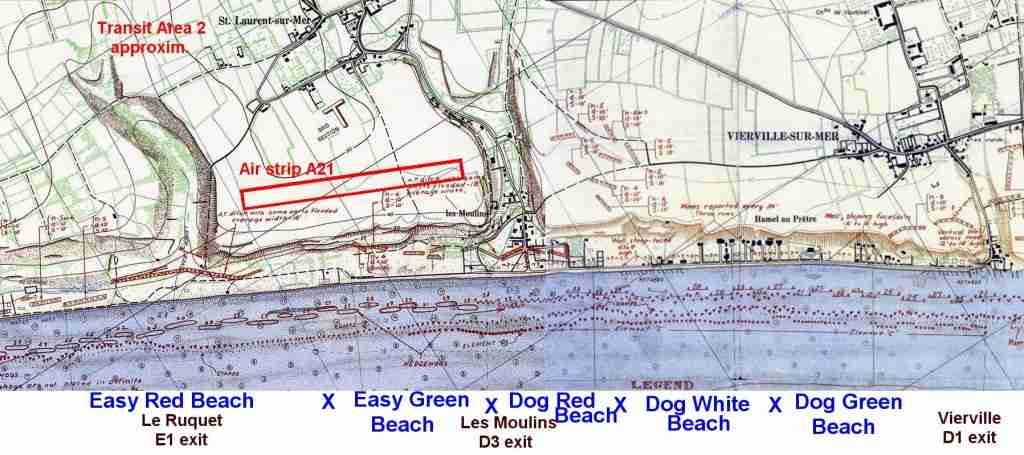
Omaha Beach
With the German defences, both artillery and mortars, together with machine gun nests and snipers, providing stiff resistance to the remnants of the American 116th Infantry division on the beach head. The Unit was unable to land until 17.00, by which time the tide had gone out, exposing far more of the beach to be negotiated, thus causing further obstacles for the landings.
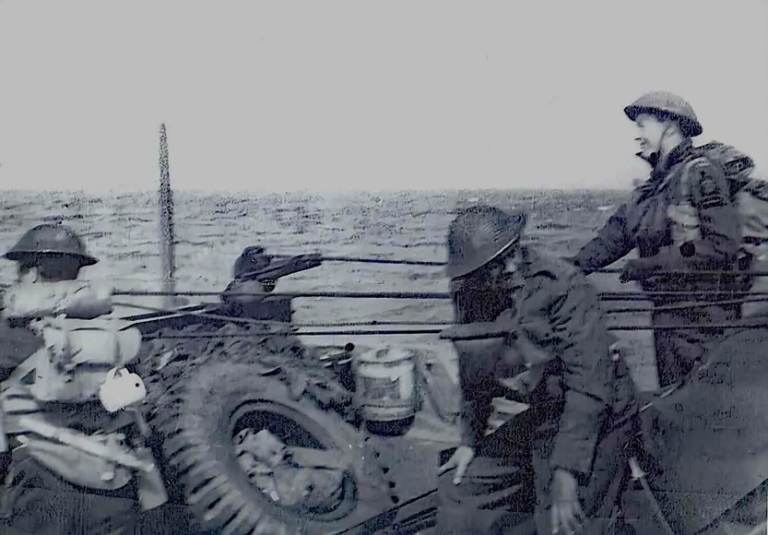
Men of 15082 on the LCT heading to Omaha
Having lost numerous vehicles during the landing, the remaining 15082 vehicles were then targeted by 88mm German artillery.
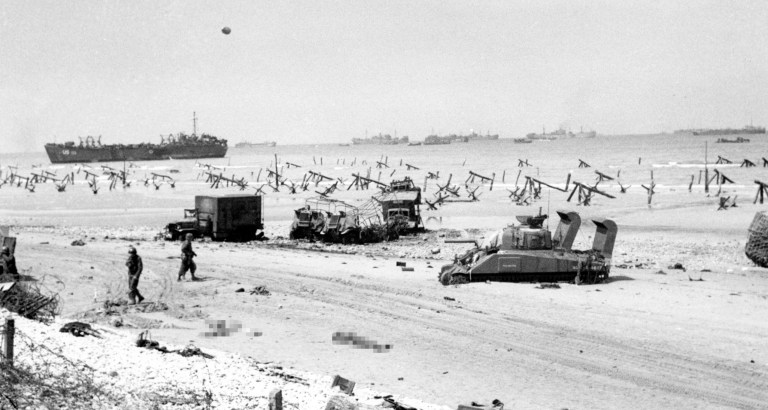
3 vehicles of 15082 wrecked on Omaha Beach next to a Sherman DD tank
Following concerted efforts and heavy losses by American forces, a path was eventually cleared off the beach head using a bulldozer. After which the remnants of 15082 made their way to the hamlet of Les Moulins, where they sheltered, having come under sustained small arms and artillery fire.
In contrast to the RAF radar and signals units that landed on D-Day at JUNO and SWORD beaches, GCI 15082, suffered 47 casualties, 11 were killed in action, and 27 vehicles were lost to gunfire or “drowning”.
As with other Joint Operations, the intention was for all British troops to wear khaki battledress, but late in the planning stages it was decided that the RAF should retain their blue/grey uniforms.
Unfortunately, by the time the RAF had managed to get ashore through sea water, sand and other forms of dirt, their anti-gas sprayed blue/grey uniforms looked very similar at a distance to the field grey of the Wehrmacht. Thus, creating a ‘Blue on Blue’ situation, to the credit of the American commanders, this was quickly recognised, and they provided GI uniforms onto which the RAF personnel sewed their insignia and badges of rank, thus eliminating the risk of friendly fire. However before they changed uniform two men of the unit had actually been taken prisoner by the Americans!
Dickie was killed when a piece of shrapnel hit him in the back of the head as he was sheltering in a slit trench after landing on the beach. His death was witnessed by his friend Eric Heathcote who was sheltering in a nearby trench.

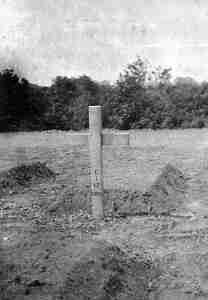
Richard's initial battlefield grave
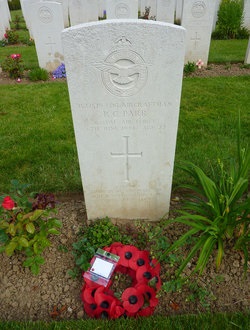
Final grave at Bayeux
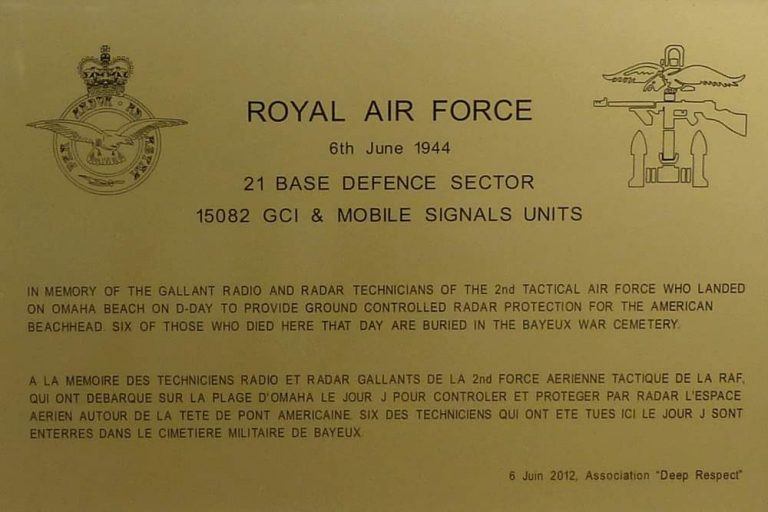
Commemorative plaque at Bayeux
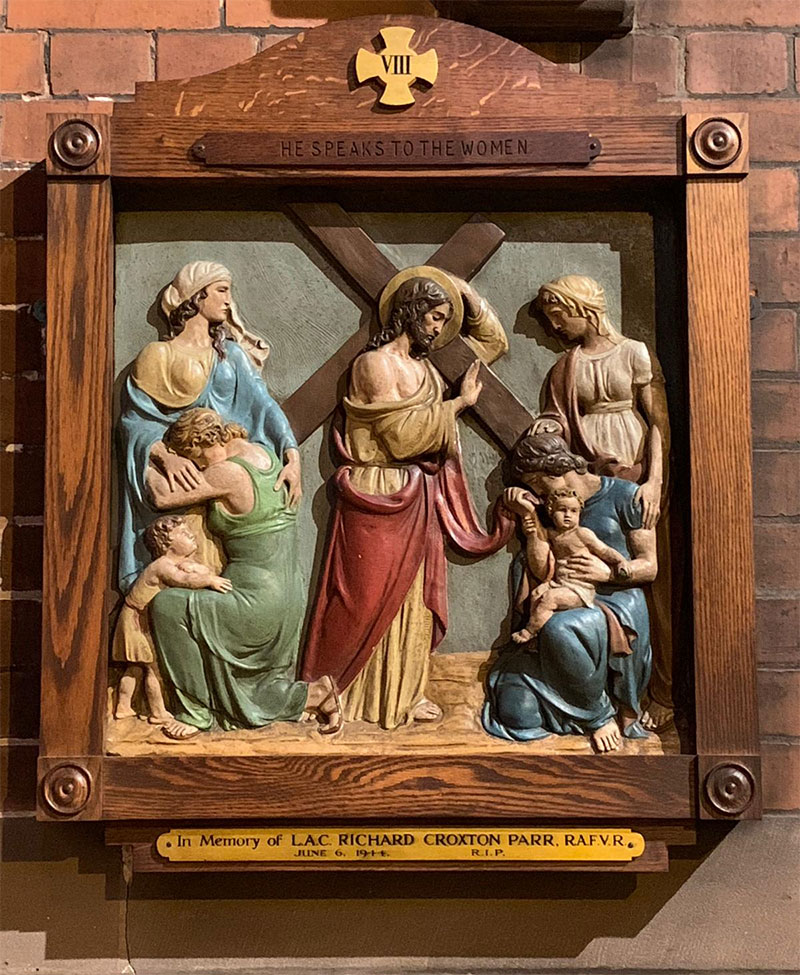
Richard's plaque at St Michael's Coppenhall
Richard Parr
Richard Croxton (Dickie) Parr was a member of 15082 GCI (Ground Control Interceptor) unit RAF and is believed to be the only person from Crewe who was killed during the D Day landings. He died on Omaha Beach which was an American landing site.
Training
The officers and airmen selected to maintain and operate GCI units in Normandy were first sent to RAF Renscombe Down, near Swanage in Dorset, where they spent about a year training for their primary role. Controllers and operators were subjected to a continuous programme of practice interceptions. Later, personnel were also trained to carry out their duties under field conditions. There were numerous exercises, including amphibious operations, and commando training was provided at the Combined Operations School, HMS Dundonald. The official monograph’s suggestion that unit personnel could all ‘be regarded as toughened fighting men as well as skilled technical tradesmen’ is, perhaps, something of an exaggeration. Nevertheless, they arrived in Normandy equipped with Sten guns, rifles and pistols, knowing full well how to use and maintain them.
Men of 15082 on training in early 1944 Dickie is second from left
15082 GCI, Royal Air Force was a Ground Control Intercept Unit. Once ashore in Normandy the unit would set up radar equipment so that it could detect enemy aircraft before they attacked the Allied landing area and call in RAF fighters to deal with them.
GCI Equipment
AMES Type 15 GCI
AMES Type 13 Height Finder
It was attached to the 9th US Army Air Force as the Americans had neither the technical equipment nor the trained personnel to maintain and operate the required equipment. It embarked in Portland, Dorset on the 3 June 1944 and landed on Omaha Beach on D-Day.
It had been planned for the GCI 15082 (part of 21 Base Defence Sector), to land on the beach codenamed “Easy Red” near to the St Laurent exit from the beach. Unfortunately, although American forces had secured ‘Easy Red’, GCI was incorrectly landed on “Dog Red” section of Omaha beach near to the exit to the hamlet of Les Moulins.
Omaha Beach
With the German defences, both artillery and mortars, together with machine gun nests and snipers, providing stiff resistance to the remnants of the American 116th Infantry division on the beach head. The Unit was unable to land until 17.00, by which time the tide had gone out, exposing far more of the beach to be negotiated, thus causing further obstacles for the landings.
Men of 15082 on the LCT heading to Omaha
Having lost numerous vehicles during the landing, the remaining 15082 vehicles were then targeted by 88mm German artillery.
3 vehicles of 15082 wrecked on Omaha Beach next to a Sherman DD tank
Following concerted efforts and heavy losses by American forces, a path was eventually cleared off the beach head using a bulldozer. After which the remnants of 15082 made their way to the hamlet of Les Moulins, where they sheltered, having come under sustained small arms and artillery fire.
In contrast to the RAF radar and signals units that landed on D-Day at JUNO and SWORD beaches, GCI 15082, suffered 47 casualties, 11 were killed in action, and 27 vehicles were lost to gunfire or “drowning”.
As with other Joint Operations, the intention was for all British troops to wear khaki battledress, but late in the planning stages it was decided that the RAF should retain their blue/grey uniforms.
Unfortunately, by the time the RAF had managed to get ashore through sea water, sand and other forms of dirt, their anti-gas sprayed blue/grey uniforms looked very similar at a distance to the field grey of the Wehrmacht. Thus, creating a ‘Blue on Blue’ situation, to the credit of the American commanders, this was quickly recognised, and they provided GI uniforms onto which the RAF personnel sewed their insignia and badges of rank, thus eliminating the risk of friendly fire. However before they changed uniform two men of the unit had actually been taken prisoner by the Americans!
Dickie was killed when a piece of shrapnel hit him in the back of the head as he was sheltering in a slit trench after landing on the beach. His death was witnessed by his friend Eric Heathcote who was sheltering in a nearby trench.
Richard's initial battlefield grave
Final grave at Bayeux
Commemorative plaque at Bayeux
Richard's plaque at St Michael's Coppenhall